AI in Education Is Transforming Schools—Here’s What Parents and Teachers Need to Know
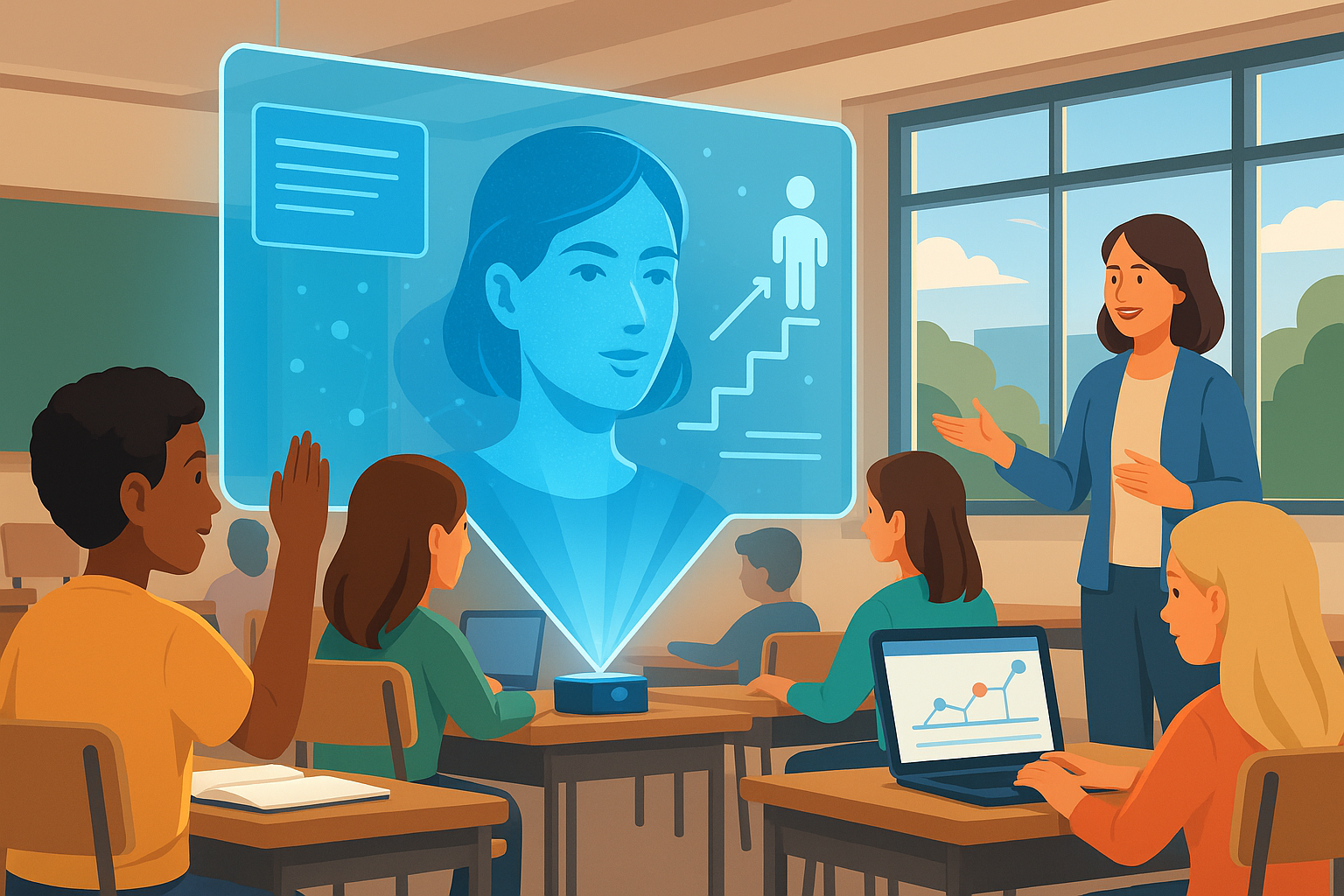
AI in education has arrived faster than anyone expected. What started as experimental chatbots has evolved into sophisticated artificial intelligence systems that are reshaping how students learn, teachers teach, and parents support their children’s academic journey.
The statistics tell the story: AI-powered tools like Khan Academy’s Khanmigo have demonstrated 12% improvements in math scores, while 45% of students now admit to using AI for assignments (Pew Research, 2024). But behind these numbers are real classrooms, real teachers, and real families trying to navigate this new landscape.
AI in education isn’t just another tech trend—it’s a fundamental shift in how knowledge is accessed, processed, and applied. Whether this transformation benefits or harms student learning depends entirely on how thoughtfully we implement these tools.
The Current State of AI in Education: What’s Really Happening in Classrooms
Personalized AI Tutoring Is Proving Its Worth
Educational AI has found its strongest foothold in personalized tutoring. Students who previously struggled with math concepts began engaging differently with the material.
The AI tutor doesn’t just provide answers—it asks Socratic questions, identifies knowledge gaps, and adapts its teaching style to individual learning patterns. Unlike human tutors, these systems are available 24/7 and never lose patience with repetitive questions.
For Parents: Your child can now access personalized tutoring that would cost hundreds of dollars per hour, available whenever they need help with homework.
For Teachers: AI tutoring handles basic skill reinforcement, freeing you to focus on higher-order thinking, creativity, and social-emotional learning.
AI-Powered Lesson Planning Is Saving Teachers Time
The administrative burden on teachers has reached crisis levels. Educational AI tools like MagicSchool.ai are providing relief by automating lesson plan creation, quiz generation, and differentiated material development.
Teachers reported saving 5-7 hours per week using AI planning tools. This isn’t about replacing teacher creativity—it’s about eliminating the repetitive tasks that prevent teachers from focusing on what matters most: their students.
For Parents: When teachers spend less time on paperwork, they have more energy for meaningful classroom engagement and individualized attention.
For Teachers: AI planning tools can generate scaffolded activities for different ability levels, create assessment rubrics, and even suggest engaging discussion questions based on your learning objectives.
The Academic Integrity Challenge Is Real But Manageable
Let’s address the elephant in the room: educational AI has created new forms of academic dishonesty.
The most successful approaches to AI and academic integrity focus on redesigning assessment rather than simply detecting AI use. When we shifted from take-home essays to in-class writing workshops, portfolio development, and oral presentations, student engagement actually increased.
For Parents: This is an opportunity to discuss intellectual honesty and the real purpose of education with your children. AI tools should enhance learning, not replace it.
For Teachers: Consider AI as a reason to innovate your assessment strategies, not abandon them entirely.
Debunking Common Myths About AI in Education
Myth 1: AI Will Replace Teachers
Educational AI excels at information delivery and skill practice, but it cannot:
- Build meaningful relationships with students
- Understand complex social dynamics in classrooms
- Provide emotional support during difficult moments
- Inspire creativity and critical thinking through human connection
- Adapt to unexpected classroom situations requiring empathy and judgment
AI is a powerful teaching assistant, not a replacement for human educators.
Myth 2: Educational AI Always Widens Achievement Gaps
While equity concerns about educational technology are valid, AI also creates unprecedented opportunities to close gaps. AI tools provide:
- Free, high-quality tutoring for students who couldn’t afford human tutors
- Real-time language translation for English language learners
- Personalized learning paths for students with learning disabilities
- 24/7 academic support for students in under-resourced communities
The key is ensuring equitable access to AI tools, not avoiding them entirely.
Myth 3: Using AI Is Academic Cheating
This perspective misunderstands both AI and the nature of learning itself. Students have always used tools—calculators, word processors, spell check, and search engines. AI represents the next evolution of learning tools.
The goal isn’t to ban AI but to teach students how to use it appropriately as part of their learning process.
Evidence-Based Strategies for Implementing AI in Education
1. Redesign Assessment to Emphasize Process Over Product
The most effective approach focuses on learning processes rather than final products.
Successful Assessment Strategies:
- Portfolio-based evaluation: Students document their learning journey, including how they used AI tools
- In-class writing workshops: Students draft, revise, and discuss their work in real-time
- Oral presentations: Students explain their thinking and defend their conclusions
- Collaborative projects: Emphasis on teamwork, communication, and problem-solving skills
2. Teach AI Literacy as a Core 21st Century Skill
AI literacy isn’t optional—it’s essential. Students need to understand how to:
- Craft effective prompts for AI tools
- Evaluate AI-generated content for accuracy and bias
- Cite AI assistance appropriately in academic work
- Recognize limitations of AI systems
- Use AI as a brainstorming partner, not a replacement for critical thinking
Practical Implementation: I recommend dedicating one class period per month to AI literacy across all subject areas, not just computer science.
3. Establish Clear Educational AI Policies
Only 25% of schools have formal AI policies (ISTE, 2024). This gap creates confusion for students, teachers, and parents. Effective AI policies should address:
- Acceptable use guidelines for different types of assignments
- Data privacy protections for student information
- Academic integrity expectations when using AI tools
- Professional development requirements for teachers
- Parent communication protocols about AI implementation
Recommended AI in Education Tools (Based on Classroom Testing)
For Student Learning Support
Khan Academy’s Khanmigo
- What it does: Personalized math and science tutoring
- Why it works: Proven 12% improvement in math scores through Socratic questioning
- Best for: Homework help and concept reinforcement
- Cost: Free tier available, premium features $20/month
Duolingo Max
- What it does: AI-powered language learning with conversation practice
- Why it works: Adaptive learning paths based on individual progress
- Best for: World language classes and ESL support
- Cost: $30/month per family
For Teacher Productivity
MagicSchool.ai
- What it does: Lesson planning, quiz generation, and differentiated materials
- Why it works: Saves 5-7 hours per week on administrative tasks
- Best for: Busy teachers who need planning support
- Cost: $10/month per teacher
Curipod
- What it does: Interactive presentation creation with built-in engagement tools
- Why it works: Students can participate via their devices with real-time feedback
- Best for: Making lectures more interactive
- Cost: Free tier, premium $8/month
For School Administration
ScribeSense
- What it does: Digitizes and provides feedback on handwritten assignments
- Why it works: Maintains benefits of handwriting while enabling digital feedback
- Best for: Elementary and middle school writing assignments
- Cost: District pricing varies
Managing Risks in AI in Education Implementation
Data Privacy and Student Safety
AI in education tools collect sensitive student data. Here are essential safeguards:
- Verify FERPA compliance before adopting any AI in education tool
- Review data retention policies and ensure student data isn’t used for AI training
- Implement single sign-on to reduce password security risks
- Train teachers on privacy settings and student data protection
Preventing Over-Reliance on AI in Education
The biggest risk isn’t that students will cheat—it’s that they’ll stop thinking critically. Signs of AI in education over-reliance include:
- Students who can’t explain their work without AI assistance
- Decreased effort on assignments when AI isn’t available
- Inability to evaluate AI-generated content for accuracy
Prevention strategies: Regular “AI-free” assignments, emphasis on metacognitive reflection, and explicit instruction in critical thinking skills.
Addressing Equity Concerns
AI in education can either widen or close achievement gaps, depending on implementation. To ensure equity:
- Advocate for district-wide licensing rather than individual school purchases
- Provide training for all teachers, not just early adopters
- Ensure reliable internet access for all students
- Offer family education sessions about AI in education tools and expectations
The Future of AI in Education: What’s Coming Next
Advanced Personalization
Next-generation AI in education systems will incorporate:
- Emotional intelligence to recognize student frustration or confusion
- Learning style adaptation that adjusts content delivery in real-time
- Cross-curricular connections that help students see relationships between subjects
- Predictive analytics that identify students at risk before they fail
Curriculum Evolution
AI in education is driving fundamental changes in what students need to learn:
- AI literacy becoming as essential as traditional literacy
- Emphasis on creativity and critical thinking skills that complement AI capabilities
- Interdisciplinary projects that reflect real-world problem-solving
- Ethics and philosophy discussions about AI’s role in society
Policy and Regulation
Expect increased government attention to AI in education:
- Federal guidelines for student data privacy in AI systems
- State standards for AI literacy in K-12 education
- Professional development requirements for teachers using AI in education tools
- Accountability measures for AI-assisted learning outcomes
Practical Action Steps for Parents and Teachers
For Parents: Supporting Your Child in the AI in Education Era
- Start conversations early about appropriate AI in education use
- Learn about the tools your child’s school is implementing
- Advocate for transparency in AI in education policies and practices
- Model ethical AI use in your own work and daily life
- Focus on process when helping with homework, not just correct answers
For Teachers: Thriving in the AI in Education Landscape
- Experiment with one AI tool at a time to avoid overwhelming yourself
- Join professional learning communities focused on AI in education
- Redesign assessments to emphasize skills AI cannot replicate
- Communicate openly with students and parents about AI in education expectations
- Advocate for professional development and policy support from administration
For School Leaders: Implementing AI in Education Successfully
- Develop comprehensive policies before widespread adoption
- Invest in teacher training and ongoing support
- Engage parents and community in AI in education discussions
- Pilot programs before district-wide implementation
- Monitor outcomes and adjust strategies based on evidence
Frequently Asked Questions About AI in Education
Is AI in education safe for elementary students?
AI in education tools designed for young learners typically include stronger privacy protections and age-appropriate content filters. However, adult supervision and clear usage guidelines remain essential.
How can teachers detect inappropriate AI use?
Focus less on detection and more on assessment design. AI in education becomes less useful for cheating when assignments emphasize process, collaboration, and in-class work.
Will AI in education make students lazy?
Like any tool, AI in education can be misused. The key is teaching students to use AI as a learning partner, not a replacement for thinking. Proper instruction in AI literacy prevents over-dependence.
What about students without access to AI in education tools?
This is why equitable access is crucial. Schools should prioritize district-wide licensing and ensure all students receive training in AI in education literacy, regardless of home technology access.
The Bottom Line: AI in Education Is Here to Stay
AI in education represents the most significant shift in teaching and learning since the internet. I can assure you that success isn’t about having the newest technology—it’s about thoughtful implementation that puts student learning first.
The schools that thrive in the AI in education era will be those that embrace these tools while maintaining focus on human connection, critical thinking, and ethical development. AI in education should amplify the best aspects of teaching and learning, not replace them.
For parents and teachers feeling overwhelmed by AI in education changes, remember: you don’t need to become an expert overnight. Start small, stay curious, and keep student wellbeing at the center of all decisions about AI in education implementation.
The future of education will be shaped by how thoughtfully we integrate AI in education tools today. By working together—teachers, parents, students, and administrators—we can ensure that AI in education serves learning, equity, and human flourishing.